

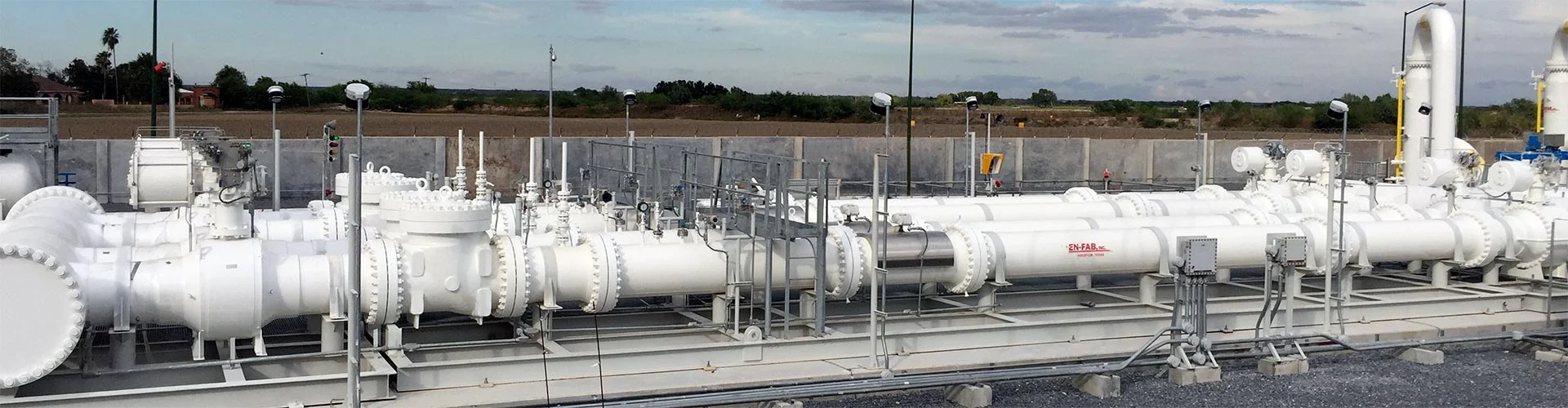
Surge relief systems are known for their quick speed of response, excellent flow characteristics, and durability in high-pressure applications.
Surge relief valves are designed with an adjustable set point that is directly related to the maximum allowable pressure of the pipeline or system.
When the product pressure at the inlet of the valve exceeds the set point, it forces the valve to open and allows the excess surge pressure to be bled off into a breakout tank or recirculated into a different pipeline.
In the event of a surge, the majority of the pressure is absorbed by the liquid and the pipe, and only the quantity of liquid necessary to relieve unsafe pressure levels is discharged to the surge relief tank.
Pilot-operated surge systems are typically used to protect pipelines transporting low-viscosity products such as gasoline or diesel.
This style of valve is installed downstream of the pump or valve that creates the surge. The valve is controlled by an external, normally closed pilot valve. The pilot is set to the desired system set point and uses a sense line that runs upstream of the valve.
When upstream process conditions exceed the pilot set point, the valve begins to open and relieve the excess pressure. Once the correct pressure is restored, the valve closes.


